
Scott's Thoughts

Click title to jump to a section and ^ TOP ^ to return. Or just scroll like a normal person. And apologies for links that make getting back here annoying. We’re annoyed, too, but it’s an app limitation. And yes, Scott once had hair that could be combed.
Couple Easter/Resurrection Week Reminders
^ TOP ^
^ TOP ^
Easter Invites & Promo
In keeping with making 2026 “The Year We Recapture The Value Of Inviting People To Church,” I’ve mentioned a couple times these results from a study about the effectiveness of church invites.
In keeping with making 2026 “The Year We Recapture The Value Of Inviting People To Church,” I’ve mentioned a couple times these results from a study about the effectiveness of church invites.
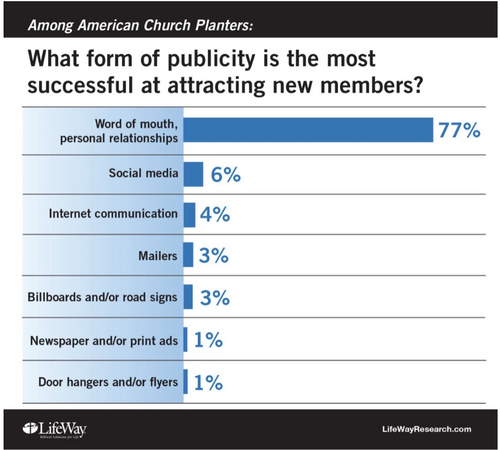
At 77%, clearly dwarfing all others, are “word of mouth” and “relationships”. Granted, we are by no means a perfect church; but if you believe that what we do at First Christian Church is faithful Word-centered gospel ministry that is Helping People Find And Follow Jesus, then why wouldn’t you invite your family, friends, neighbors, and coworkers to church with you? :o)
Believe me, I understand 1,000% the never-ending tensions involved in getting my own family and work responsibilities done—if only ‘twere so—let alone adding the personal weight of seeking the lost; but if there’s anything the western, spiritually-and-materially bloated Christian needs to add to their walk with God, it’s the Christlike pursuit of personal evangelism and disciplemaking. We’ve gotten lazy and have allowed ourselves to value personal security and earthbound vision above Kingdom advance. Jesus’ command to “Go therefore and make disciples of all nations” (Matthew 28:19) presses on ordinary Christians in ordinary life to look past our personal vision to speak, invite, and help others come hear the gospel—to seek first God’s kingdom and righteousness (Matthew 6:33). And when Andrew “first found his own brother Simon and said to him, ‘We have found the Messiah’… He brought him to Jesus” (John 1:41-42), Scripture shows that disciplemaking often begins with simple, personal, relational witness that is integrated in the ordinary pathways of daily life.
So please help us get the word out shock-and-awe style for Easter by grabbing an Easter Yard Sign and Invite Card—available at all campuses—and by sharing our promo video on the socials. (I believe it’s pinned to the top of our FCC Facebook page.) And then pray and look for an opportunity this week to invite someone to church with you! :o)
All-Church Good Friday Service, Friday, Apr 4, 6p, At Greeneville Campus
Every year, our FCC Residents get the experience of helping plan and execute a “tenebrae” service, and they always do a great job. A Tenebrae service is a traditional Good Friday (usually) worship gathering marked by the progressive extinguishing of light—through Scripture readings, silence, and song—to help the church meditate on the darkness of Christ’s suffering and death until the service dismisses in quiet reflection. It’s always a helpful start to Easter weekend—come join us Friday.
All-Church Community Easter Sunday Service, Sun, Apr 5, 10a, At Tusculum University Pioneer Arena
This special, community-wide gathering brings our church together in one service to celebrate the resurrection of Jesus Christ—the Risen King who defeated death and offers new life to all by faith! With plenty of seating, live worship led by our all-church band and choir, a safe and welcoming environment for families, trained security, and a dedicated team of background-checked children’s volunteers, we’ve thoughtfully prepared a space and 75-minute service where you and your family can worship with confidence and joy.
Believe me, I understand 1,000% the never-ending tensions involved in getting my own family and work responsibilities done—if only ‘twere so—let alone adding the personal weight of seeking the lost; but if there’s anything the western, spiritually-and-materially bloated Christian needs to add to their walk with God, it’s the Christlike pursuit of personal evangelism and disciplemaking. We’ve gotten lazy and have allowed ourselves to value personal security and earthbound vision above Kingdom advance. Jesus’ command to “Go therefore and make disciples of all nations” (Matthew 28:19) presses on ordinary Christians in ordinary life to look past our personal vision to speak, invite, and help others come hear the gospel—to seek first God’s kingdom and righteousness (Matthew 6:33). And when Andrew “first found his own brother Simon and said to him, ‘We have found the Messiah’… He brought him to Jesus” (John 1:41-42), Scripture shows that disciplemaking often begins with simple, personal, relational witness that is integrated in the ordinary pathways of daily life.
So please help us get the word out shock-and-awe style for Easter by grabbing an Easter Yard Sign and Invite Card—available at all campuses—and by sharing our promo video on the socials. (I believe it’s pinned to the top of our FCC Facebook page.) And then pray and look for an opportunity this week to invite someone to church with you! :o)
All-Church Good Friday Service, Friday, Apr 4, 6p, At Greeneville Campus
Every year, our FCC Residents get the experience of helping plan and execute a “tenebrae” service, and they always do a great job. A Tenebrae service is a traditional Good Friday (usually) worship gathering marked by the progressive extinguishing of light—through Scripture readings, silence, and song—to help the church meditate on the darkness of Christ’s suffering and death until the service dismisses in quiet reflection. It’s always a helpful start to Easter weekend—come join us Friday.
All-Church Community Easter Sunday Service, Sun, Apr 5, 10a, At Tusculum University Pioneer Arena
This special, community-wide gathering brings our church together in one service to celebrate the resurrection of Jesus Christ—the Risen King who defeated death and offers new life to all by faith! With plenty of seating, live worship led by our all-church band and choir, a safe and welcoming environment for families, trained security, and a dedicated team of background-checked children’s volunteers, we’ve thoughtfully prepared a space and 75-minute service where you and your family can worship with confidence and joy.
Dad’s Daily(ish) Devos for Holy Week
^ TOP ^
^ TOP ^
Yesterday, Saturday, March 28, while writing and sending my family the latest DDD, I noticed that tomorrow would be Matthew 21, which starts with the Triumphal Entry. So I figured I’d roughly map this week’s DDDs onto Holy Week in Matthew 21-28 for your reading and study this week, to get you ready for Easter/Resurrection Sunday. You can access them at fccgreene.org/ddd, which goes to a “Substack” I’ve just started onto which I’ll post ongoing DDDs for anyone interested in reading after this week. [On the “Substack,” which for me will simply be a writing/publishing platform—with comments and monetization turned off—you can subscribe to receive DDDs (and non-FCC-specific Scott’s Thoughts blurbs) via email or just click on “No thanks” to go to the DDDs/STs.]
In basic terms, this week will look like this:
Before jumping in, a few words re the gist of the whys and hows of DDDs, condensed from a longer and more formal intro I’m working on:
In a world of devotional material that often settles for sentiment over substance, these Dad’s Daily(ish) Devotionals aim to help ordinary Christians read the Bible carefully, devotionally, and obediently—one chapter at a time, in about 500 words or fewer. Each entry links to the ESV text and follows the flow of the chapter, anchoring readers in key words and phrases so Scripture itself sets the agenda. Along the way, every DDD includes a “Redemptive-historically…” sentence to locate the chapter within the unfolding story of God’s saving work in Christ, and a “Hermeneutical nugget for Scripture and life…” to teach how the Bible actually communicates and applies meaning. The goal is to train the mind and engage the heart—so that as we learn to read Scripture rightly, we also learn to let Scripture read us, shaping what we believe, how we live, and whom we trust.
So, anyhoo… Feel free to read for yourself this week, or even copy/paste to your own family (to force your kids to read the Bible. If you’re doing so, I suggest pasting the actual text of the chapter, unlike below where, for space, I’ve just included a link.) Here’s today’s Matthew 21 entry re Palm Sunday:
DDD for Sat, Mar 28 – Matthew 21: Receive The King On His Terms: Riding Humbly To Save, Yet Judging Every Fruitless Pretender
Read Matthew 21 first! // Matthew 21 opens the final section of the Gospel (chs 21-28) with Jesus entering Jerusalem at the start of the week leading to His crucifixion—and from the first moment He arrives, He forces the city to reckon with what kind of King He is. On Sunday, in fulfillment of Zechariah 9:9, Jesus rides in “humble, and mounted on a donkey” (v 5), not a warhorse of conquest. The crowds shout, “Hosanna [Hebrew: “O save”] to the Son of David!” (v 9), but when the “stirred up” city (v 10) asks, “Who is this?” they answer only, “the prophet Jesus, from Nazareth of Galilee” (vv 10-11)—while true, it falls far short of what He had come to reveal. On Monday (cf Mark 11:12-19), Jesus entered the temple and “drove out all who sold and bought,” declaring, “My house shall be called a house of prayer, but you make it a den of robbers” (vv 12-13; cf Isaiah 56:7; Jeremiah 7:11). By cleansing the temple, Jesus asserts authority as its Lord and immediately proves it by healing “the blind and the lame” in its courts (v 14), restoring those whom the temple culture had effectively shut out. When the chief priests object to children crying “Hosanna to the Son of David!” Jesus answers with Psalm 8: “Out of the mouth of infants and nursing babies you have prepared praise” (vv 15-16). The next morning He curses a leafy yet fruitless fig tree, and “the fig tree withered at once” (v 19)—a prophetic sign that Israel’s religious establishment, for all its outward show, is fruitless and under judgment. When the authorities demand, “By what authority are you doing these things?” (v 23), Jesus exposes their hardened unbelief with a question about John’s baptism they refuse to answer (vv 24-27). He then tells two devastating parables. The parable of the two sons reveals that “the tax collectors and the prostitutes go into the kingdom of God before you” because they actually repented (vv 28-32). The parable of the wicked tenants ends with the leaders pronouncing their own judgment: “He will put those wretches to a miserable death” (vv 33-41). Jesus drives it home: “The stone that the builders rejected has become the cornerstone” and “the kingdom of God will be taken away from you and given to a people producing its fruits” (vv 42-43; cf Psalm 118:22-23). Redemptive-historically, Jesus’ entry, temple cleansing, and parables of judgment converge to reveal Him as the humble Servant-King who fulfills the prophets and the rejected cornerstone whose death becomes the foundation of God’s new covenant people (cf Isaiah 28:16; Acts 4:11; 1 Peter 2:4-8). Hermeneutical nugget for Scripture and life: when Matthew stacks the triumphal entry, temple cleansing, cursed fig tree, and two judgment parables into one chapter, he is teaching us that Jesus warrants not mere admiration but the fruit of Kingdom allegiance—because the King who comes gently on a donkey also inspects the temple and the tree, and what He finds determines blessing or judgment. So today, examine whether your life is producing the fruit of faith or leaves that deceive, for only those receiving this humble King on His terms will endure His inspection.
In basic terms, this week will look like this:
- Sat, Mar 28 – Matthew 21 – Palm Sunday/Monday (Triumphal Entry and Temple Cleansing) > Already done and pasted below. (And posted on fccgreene.org/ddd.)
- Sun, Mar 29 – Matthew 22 – Tuesday (Teaching in the Temple and Confrontations)
- Mon, Mar 30 – Matthew 23 – Tuesday (Woes to the Scribes and Pharisees)
- Tue, Mar 31 – Matthew 24 – Tuesday (Olivet Discourse, Part 1)
- Wed, Apr 1 – Matthew 25 – Tuesday (Olivet Discourse, Part 2)
- Thu, Apr 2 – Matthew 26 – Wednesday/Thursday (Anointing, Betrayal, and Last Supper)
- Fri, Apr 3 – Matthew 27 – Good Friday (Trial, Crucifixion, and Burial)
- Sat, Apr 4 – Matthew 28 – Easter/Resurrection Sunday (Resurrection and Commission)
Before jumping in, a few words re the gist of the whys and hows of DDDs, condensed from a longer and more formal intro I’m working on:
In a world of devotional material that often settles for sentiment over substance, these Dad’s Daily(ish) Devotionals aim to help ordinary Christians read the Bible carefully, devotionally, and obediently—one chapter at a time, in about 500 words or fewer. Each entry links to the ESV text and follows the flow of the chapter, anchoring readers in key words and phrases so Scripture itself sets the agenda. Along the way, every DDD includes a “Redemptive-historically…” sentence to locate the chapter within the unfolding story of God’s saving work in Christ, and a “Hermeneutical nugget for Scripture and life…” to teach how the Bible actually communicates and applies meaning. The goal is to train the mind and engage the heart—so that as we learn to read Scripture rightly, we also learn to let Scripture read us, shaping what we believe, how we live, and whom we trust.
So, anyhoo… Feel free to read for yourself this week, or even copy/paste to your own family (to force your kids to read the Bible. If you’re doing so, I suggest pasting the actual text of the chapter, unlike below where, for space, I’ve just included a link.) Here’s today’s Matthew 21 entry re Palm Sunday:
DDD for Sat, Mar 28 – Matthew 21: Receive The King On His Terms: Riding Humbly To Save, Yet Judging Every Fruitless Pretender
Read Matthew 21 first! // Matthew 21 opens the final section of the Gospel (chs 21-28) with Jesus entering Jerusalem at the start of the week leading to His crucifixion—and from the first moment He arrives, He forces the city to reckon with what kind of King He is. On Sunday, in fulfillment of Zechariah 9:9, Jesus rides in “humble, and mounted on a donkey” (v 5), not a warhorse of conquest. The crowds shout, “Hosanna [Hebrew: “O save”] to the Son of David!” (v 9), but when the “stirred up” city (v 10) asks, “Who is this?” they answer only, “the prophet Jesus, from Nazareth of Galilee” (vv 10-11)—while true, it falls far short of what He had come to reveal. On Monday (cf Mark 11:12-19), Jesus entered the temple and “drove out all who sold and bought,” declaring, “My house shall be called a house of prayer, but you make it a den of robbers” (vv 12-13; cf Isaiah 56:7; Jeremiah 7:11). By cleansing the temple, Jesus asserts authority as its Lord and immediately proves it by healing “the blind and the lame” in its courts (v 14), restoring those whom the temple culture had effectively shut out. When the chief priests object to children crying “Hosanna to the Son of David!” Jesus answers with Psalm 8: “Out of the mouth of infants and nursing babies you have prepared praise” (vv 15-16). The next morning He curses a leafy yet fruitless fig tree, and “the fig tree withered at once” (v 19)—a prophetic sign that Israel’s religious establishment, for all its outward show, is fruitless and under judgment. When the authorities demand, “By what authority are you doing these things?” (v 23), Jesus exposes their hardened unbelief with a question about John’s baptism they refuse to answer (vv 24-27). He then tells two devastating parables. The parable of the two sons reveals that “the tax collectors and the prostitutes go into the kingdom of God before you” because they actually repented (vv 28-32). The parable of the wicked tenants ends with the leaders pronouncing their own judgment: “He will put those wretches to a miserable death” (vv 33-41). Jesus drives it home: “The stone that the builders rejected has become the cornerstone” and “the kingdom of God will be taken away from you and given to a people producing its fruits” (vv 42-43; cf Psalm 118:22-23). Redemptive-historically, Jesus’ entry, temple cleansing, and parables of judgment converge to reveal Him as the humble Servant-King who fulfills the prophets and the rejected cornerstone whose death becomes the foundation of God’s new covenant people (cf Isaiah 28:16; Acts 4:11; 1 Peter 2:4-8). Hermeneutical nugget for Scripture and life: when Matthew stacks the triumphal entry, temple cleansing, cursed fig tree, and two judgment parables into one chapter, he is teaching us that Jesus warrants not mere admiration but the fruit of Kingdom allegiance—because the King who comes gently on a donkey also inspects the temple and the tree, and what He finds determines blessing or judgment. So today, examine whether your life is producing the fruit of faith or leaves that deceive, for only those receiving this humble King on His terms will endure His inspection.
A Few Misc Items
^ TOP ^
^ TOP ^
Resources Re Last Week’s Sermon On Hell
During Tyson’s and Tommy’s sermons last week—which was a hard topic they handled with aplomb—I heard 2-3 things that prompted me to think, “Hey, we’ve got resources that help answer quite a few related questions and issues.” So, voila, recent related FCC resources:
Did You Know… ?!
… that our Tech Team has run sound—and some other techy stuff—for 20 events for the Greene County Schools in the last 5-6 months?! (Probably not—how would you know unless told? Cf. Romans 10:14-15 applied to church announcements.) How cool is that? Wes Ford and a few FCC Tech crew members have pitched in to help do some things for them that our portable multisite infrastructure uniquely positions us to do. Well done, Tech Team.
Update Re Last Scott’s Thoughts: Recent (And Not So Recent) Theological And Sociocultural Thoughts You May Have Missed
The idea is to compile a comprehensive list of such items we’ve covered over the years. So, just wanted to letcha know we’re up to about 2 dozen links (here in this previous ST post) re such topics involving the intersection of Christian faith/theology and culture, and I haven’t even remotely gotten to half of ‘em yet. (But don’t worry, there’s already plenty there to keep 90% of you reading until I get others from Brown Bags & Bibles, Elders Position Papers, and sermons linked.) Until I get ‘em listed by topic and linked on this previous ST post, you can go to this Google Doc (fccgreene.org/fcconculturaltopics) which has some other such links.
During Tyson’s and Tommy’s sermons last week—which was a hard topic they handled with aplomb—I heard 2-3 things that prompted me to think, “Hey, we’ve got resources that help answer quite a few related questions and issues.” So, voila, recent related FCC resources:
- GQA Booklet On “What Happens To Those Who Die Apart From Christ? What Is The Biblical View Of Hell?”
- BB&B On Hell – It made sense, on the heels of our recent 4-episode series on eschatology (end times) and previous 4 episodes on heaven, to end with an episode on hell.
- BB&B(&B) On The Nature Of God’s Love – (The 4th B stands for “Books”.) Currently being published, we’re doing 3 (or 4?) episodes on D. A. Carson’s helpful little book called The Difficult Doctrine of the Love of God, which you can buy at cost in The Hub at any campus.
Did You Know… ?!
… that our Tech Team has run sound—and some other techy stuff—for 20 events for the Greene County Schools in the last 5-6 months?! (Probably not—how would you know unless told? Cf. Romans 10:14-15 applied to church announcements.) How cool is that? Wes Ford and a few FCC Tech crew members have pitched in to help do some things for them that our portable multisite infrastructure uniquely positions us to do. Well done, Tech Team.
Update Re Last Scott’s Thoughts: Recent (And Not So Recent) Theological And Sociocultural Thoughts You May Have Missed
The idea is to compile a comprehensive list of such items we’ve covered over the years. So, just wanted to letcha know we’re up to about 2 dozen links (here in this previous ST post) re such topics involving the intersection of Christian faith/theology and culture, and I haven’t even remotely gotten to half of ‘em yet. (But don’t worry, there’s already plenty there to keep 90% of you reading until I get others from Brown Bags & Bibles, Elders Position Papers, and sermons linked.) Until I get ‘em listed by topic and linked on this previous ST post, you can go to this Google Doc (fccgreene.org/fcconculturaltopics) which has some other such links.
A Few Words Re Preaching Goals & Methods, Listening To Preaching, The Manuscript, The Study Guide, Etc.
^ TOP ^
^ TOP ^
I’ve mentioned some of this here and there in previous ST posts, but wanted to point out a few things that I think might be helpful.
How/Why We Preach the Way We Do
While there are more than a few other good reasons, lemme just condense it down to one for now: 60-65% of our people receive 90+% of their Bible intake at church, therefore we don’t have margin for fluff—we need to teach people God’s Word. They aren’t getting it enough elsewhere.
Advice For Listening To And Engaging With The Sermon
Granted, a Pastor telling you how to listen to his sermons sounds self-serving enough to dismiss his advice, but I think there are some things to keep in mind that might help you more effectively navigate sermons. Occasionally, as I’m writing a sermon, I think, ‘This is a particularity about our preaching that means people need to be intentional about their engagement.’ So, here are a few random pieces of advice for the listener:
Footnotes In The Manuscript
A couple things here. One, re the manuscript… we have a Staff Maxim around here: you haven’t thought it through until you’ve written it down. This is true in life, but especially in endeavors like preaching. This is why we require those preaching to write out a manuscript. (And no, this is not mutually exclusive with the Spirit’s work, which happens in the preparation more than merely the delivery.) It helps ensure our preaching is faithful to the Scriptural argument. But this also means that, if you’ve got a question about what was or wasn’t said, or you’re a Life Group Leader, you’ve got help. You can always find the sermon manuscript on the “Sermon Guide” on the app (or at fccgreene.org/sermonguide).
Second, re footnotes… A good sermon must make the argument the text itself is making and not whatever else we think may be related or interesting. Good preaching knows what to leave out as much as what to include because including too much often means communicating too little. This means that there are tons of cool nuggets that, while interesting or even somehow related, may not be helpful to include and that will ultimately detract from, I believe, the spiritual power of God speaking through His Word instead of man speaking through his piques and peculiarities. This doesn’t mean sermons can’t have multiple “points,” but it does mean that they are only helpful if connected to the main argument the text is making. So, for those who may wonder, “But what about this? How come you didn’t cover that? You should’ve referred to this verse!” there are footnotes. While I don’t always get to including as many as I’d like, there’s usually much more there, in the footnotes. It has increasingly become where I put interesting or related info that may not be rhetorically helpful. (And is another reason why manuscripting matters.) Having said all that, today’s manuscript has almost no footnotes whatsoever. (Awesome. #Winning. Sorry—my preparation process this week wasn’t as thorough as normal. Just can’t get it all done sometimes. ‘Sometimes?! Like, ever!’)
Anyhoo… voila, a few ways to more deeply learn from God’s Word. For anyone willing, we provide quite a few contexts and biblical and theological helps to keep you well fed.
How/Why We Preach the Way We Do
While there are more than a few other good reasons, lemme just condense it down to one for now: 60-65% of our people receive 90+% of their Bible intake at church, therefore we don’t have margin for fluff—we need to teach people God’s Word. They aren’t getting it enough elsewhere.
Advice For Listening To And Engaging With The Sermon
Granted, a Pastor telling you how to listen to his sermons sounds self-serving enough to dismiss his advice, but I think there are some things to keep in mind that might help you more effectively navigate sermons. Occasionally, as I’m writing a sermon, I think, ‘This is a particularity about our preaching that means people need to be intentional about their engagement.’ So, here are a few random pieces of advice for the listener:
- Watch/Listen to the Weekly Bible Study Podcast beforehand. (It’s available on the app under “Pulse” > “Media” or at fccgreene.org/wbsp.) It’s a 30-minutes run-down of the main points and meaning of the passage where we start with a mixer, end with application, and also often make fun of one another. It’s mostly intended to help Life Group leaders prepare, but it’s helpful for anyone wanting to learn more about the passage and how to rightly interpret Scripture, (especially since, even if I don’t personally love the headings we use in the WBSP episode, I try to stay close to them during preaching so that listeners to both WBSP and sermons will be more familiar.)
- Read the day’s passage beforehand, whether on Saturday or Sunday morning as you’re waiting for worship to begin. (‘As if!?’) Btw, I mention Saturday because, if you haven’t noticed, in the Worship Guide and Study Guide, Saturday’s Bible Reading is always the Sunday passage. (You’re welcome.)
- Pray beforehand for a heart and mind set on learning from God’s Word. Admit that God is smarter than you and determine to learn something new. This is why we pray together immediately beforehand.
- Take notes during the sermon. I’ve been doing this since high school with almost every sermon, talk, lecture, conference, etc., I attend. Keeps me focused.
- Engage with the Study Guide. Read through the week’s study helps. There’s space for sermon notes (with more room than in previous editions, for people still writing in bubble letters like Middle School girls.) Each week has related-to-the-sermon Daily Bible Readings to further drive things home from the rest of Scripture. (See “Redemptive-historically,…” in the above intro to DDDs.)
- Go to Life Group. If you’re not in a LG, you’re half engaged and shouldn’t expect to learn as much.
Footnotes In The Manuscript
A couple things here. One, re the manuscript… we have a Staff Maxim around here: you haven’t thought it through until you’ve written it down. This is true in life, but especially in endeavors like preaching. This is why we require those preaching to write out a manuscript. (And no, this is not mutually exclusive with the Spirit’s work, which happens in the preparation more than merely the delivery.) It helps ensure our preaching is faithful to the Scriptural argument. But this also means that, if you’ve got a question about what was or wasn’t said, or you’re a Life Group Leader, you’ve got help. You can always find the sermon manuscript on the “Sermon Guide” on the app (or at fccgreene.org/sermonguide).
Second, re footnotes… A good sermon must make the argument the text itself is making and not whatever else we think may be related or interesting. Good preaching knows what to leave out as much as what to include because including too much often means communicating too little. This means that there are tons of cool nuggets that, while interesting or even somehow related, may not be helpful to include and that will ultimately detract from, I believe, the spiritual power of God speaking through His Word instead of man speaking through his piques and peculiarities. This doesn’t mean sermons can’t have multiple “points,” but it does mean that they are only helpful if connected to the main argument the text is making. So, for those who may wonder, “But what about this? How come you didn’t cover that? You should’ve referred to this verse!” there are footnotes. While I don’t always get to including as many as I’d like, there’s usually much more there, in the footnotes. It has increasingly become where I put interesting or related info that may not be rhetorically helpful. (And is another reason why manuscripting matters.) Having said all that, today’s manuscript has almost no footnotes whatsoever. (Awesome. #Winning. Sorry—my preparation process this week wasn’t as thorough as normal. Just can’t get it all done sometimes. ‘Sometimes?! Like, ever!’)
Anyhoo… voila, a few ways to more deeply learn from God’s Word. For anyone willing, we provide quite a few contexts and biblical and theological helps to keep you well fed.
Footnotes
1 Even if we use a statistically high bar of outside-of-church Bible engagement of 3 or more times per week (5–10 minutes each) and average church attendance is 2/3 of the year (with 40-minute church Bible encounters), then about 60–65% of Evangelical Protestants receive at least 90% of their total annual Bible intake at church. (See American Bible Society, State of the Bible 2025, pp. 4, 8, 95; Pew Research 2021; Barna 2022.)
Posted in Scotts Thoughts